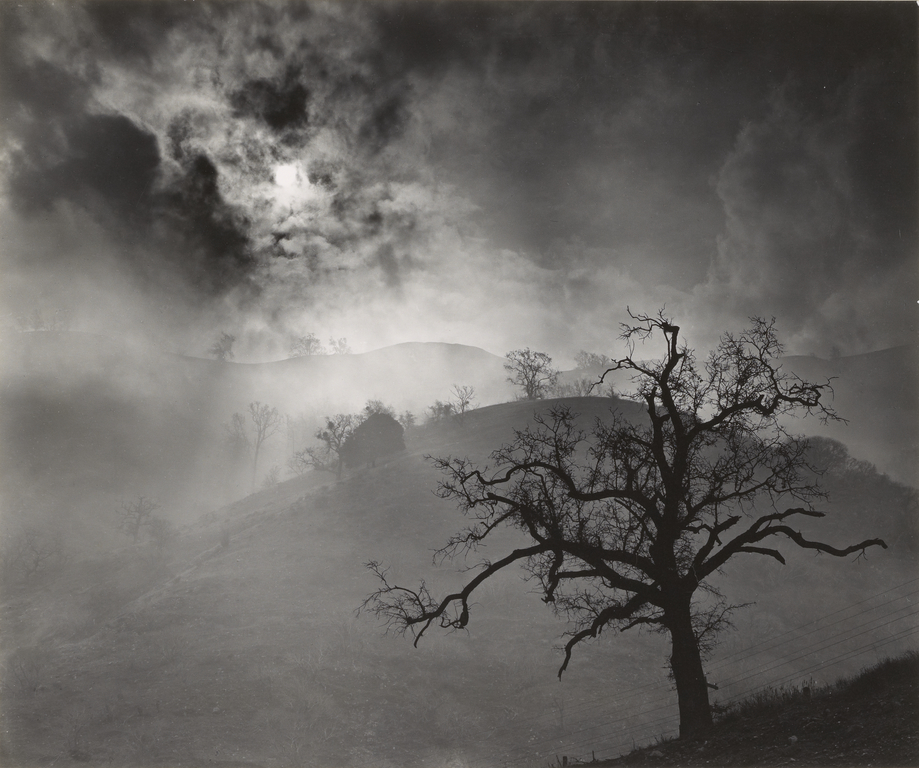
Wynn Bullock: An Appreciation


I recently purchased a small book of photography by Wynn Bullock. I got much more than expected. Not only did I get a book of photography, I received a whole new perspective on the art of photography. Bullock, considered a master of the art, was 42 years of age when he began making photos after realizing the camera records much more than that which is visible: The medium of photography can record not only what the eyes see, but that which the mind's eye sees as well. The camera is not only an extension of the eye, but of the brain. It can see sharper, farther, nearer, slower, faster than the eye. It can see by invisible light. It can see in the past, present, and future. Instead of using the camera only to reproduce objects, I wanted to use it to make what is invisible to the eye, visible. This philosophy places Bullock in the company of such photographers as Ed Weston, who approached the art with an almost metaphysical mindset.


That photography is a powerful emotional tool is a foregone conclusion; one need only to look at the impact of photojournalism during a time of war to see that the art can sway public opinion by appealing to the emotional side of the psyche. Bullock sought the mysterious, the hidden, even the whimsical in his work. He succeeded brilliantly.

Comments

Popular posts from this blog

Regarding Keeslyn

In January 2020, a young lady named Keeslyn Roberts disappeared from a fuel station near my home. The case remains unsolved. This post will examine the actions, and lack thereof, of those in authority, and how this contributes to the case remaining unsolved. But first, a little backstory. As a teen, I lived in the same neighborhood as the Roberts family. Keeslyn's father, Eric, is older than I, and I don't recall the two of us having much interaction. His sister, on the other hand, is the same age and we've been friends for over 40 years. It was she who told me about Keeslyn's disappearance and the family's frustrations with the lack of police action. To learn more of the specifics of the case, numerous podcasts and news stories are available online. To my understanding, the police reaction to the disappearance has thus far been little to no reaction. After no word from his daughter for several days, Eric went to the fuel station where her car was parked. He th...

Visiting Alice

Savannah, Georgia is one of my favorite cities. Younger than London, older than San Francisco, with a degree of quirk rivaled only by New Orleans, Savannah is a six hour (if Atlanta traffic is agreeable) drive from my home in the northwestern corner of the state.  Comparing my region with that of Savannah is an exercise in futility; they are worlds apart. One is lower Appalachia, with rolling green hills and valleys, creeks and waterfalls. The other is coastal Georgia, low country, wetlands. Even the cultures and accents are sufficiently different as to make a new acquaintance appear surprised when they ask where you're from and you reply "Georgia." Something neither place lacks is ghosts, but you probably knew that, didn't you? View this YouTube video by Dixie After Dark for a bit of info on Georgia's first ghost, Alice Riley. I love writing about Savannah. I can almost see the Spanish moss and smell the pot of low country boil!

The Willowdale Bridge

During my childhood, when I-75 was a divided four lane and Highway 41 was still the main road through town and smaller roads snaked over and between the hills, the Willowdale bridge crossed Mill Creek along one of those side streets. That is, until The Day The Truck Tried To Cross. On that day in the late 70s, a truck driver tried to drive too large a truck over too small a bridge, causing a collapse and putting the truck in the creek below. My dad insisted we go have a look, so into the car and on the way we went.  It was quite a sight for my young eyes and the memory still feels fresh. My wife, who lived nearby, remembers the event well, as I suppose all who saw it did.  Willowdale is also the site of a train derailment many years ago. Here's the story as told by Norman Blake: The bridge was decommissioned long ago and has fallen into disrepair. A walking trail has replaced the road, but the remains of the bridge still stand.