
Futureproofing: A Guide To Your Saints


Inspiration has many sources. I prefer to stand on the shoulders of giants.
This series is inspired by many profound thinkers, chief among them Philip K. Dick. Dick, or PKD, was a science fiction author, a visionary whose work and influence loom large over the present time. Indeed, it was Dick who best predicted artificial intelligence and virtual reality. He also predicted misuse of technology as a means of social control. Paranoid, drug-addled and the unwitting recipient of a series of spiritual experiences, PKD is the patron saint of our time. Remember, it was he who warned us our toasters would be spying on us.
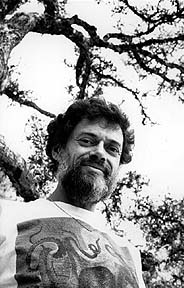
If PKD described the black iron prison that keeps us enslaved. Terence McKenna sought to teach us how to break out of it. Psychedelics, spirituality, science, any tool that works is to be used. McKenna advocated finding a new operating system to replace the buggy one in use, while reminding us that this is not a dress rehearsal. Life is to be lived, and the first step to living is to reclaim the personal sovereignty that has been surrendered, either by intent or by default, to modern society.

PKD and McKenna are no longer with us on the physical plane, but a powerful contemporary influence is Gordon White, whose book The Chaos Protocols and writing at Rune Soup directly inspired this series. Solid advice on magic, geopolitics, economics and more can be found there. The Archonology series is a must-read for anyone interested in futureproofing their life (and provides quite a bit of hidden history that explains how we got here).
This is just a shortlist of influences. As the series progresses, I'm sure to drop more names, and hopefully links. Until next time, a thorough reading of the above is more than enough to get you started. And perhaps even finished!

Comments

Popular posts from this blog

Building a FOSS Writing Platform

 I've taken a few steps toward resuming writing. I've written off and on over the years and now feels like a good time to get a few pieces started, maybe even finished. I have a long habit of starting more than I finish. As a Free/Open Source Software ( FOSS ) enthusiast, I plan to build my workflow exclusively around such software. The Linux operating system will be the platform; I have a strong preference for Linux Mint . Mint is a stable, conservative sort of operating system, an Ubuntu derivative that surpasses its foundation. This would provide an enterprise-grade platform for my writing and small publishing firm (more on this later). As mentioned, I want my writing and publishing to be done on a FOSS platform. I've used Ubuntu Linux for some time and find it works well, but their parent company, Canonical, appears to be drifting toward centralization, while the Snap application packaging is proprietary software, which is the opposite of FOSS. Canonical isn't a pu...

In Memorium: Mitch

Author's note. I've reached the age where friends and loved ones pass with greater frequency. This is my attempt to memorialize those who have gone before, the first in a series dedicated to absent friends. These are people I love and respect, whose stories deserve to be told. Mitch I met Mitch my junior year in high school. He'd transferred from a nearby school and was a year younger than I. This was a fortunate move for me, as both of my closest friends had moved out of state over the summer and I was feeling a bit lost. Marijuana and rock music solidified the friendship, and soon we were hanging out alot with the mutual friends. Our group of friends were stoners and lived the stoner lifestyle, getting high, watching too much TV, living on junk food. We’d tell the same jokes repeatedly, laugh like we’d never heard it before, only for one of us to tell it again soon after and repeat the cycle. It was like a scene in Philip K Dick’s “A Scanner Darkly,” when Bob Arctor ...

How To Beat A Billionaire - Updated

If you've spent any time at all on this site, you will have noticed I have an interest in investing. I had no interest in finance until my mid-40s, when I took a job at a printing company in which one of the partners is a CPA. I learned personal finance the hard way, struggling with credit card debt in my early 20s (it was the 90s; I blame the guitar and camera stores). After digging myself out of the hole I was in by age 27, I was cautious to avoid debt anytime I could. Investing, aside from employer retirement plans, was not on my radar. Fatherhood really spurred me into action when it came to investing. There's simply no way a savings account can outpace inflation; if you want to thrive financially, investing is the best way to get ahead. So, with encouragement from my boss, I began to study and learn. Investopedia and The Balance proved to be immensely helpful. In time, I opened an account and started buying exchange traded funds (ETFs) and was on my way. I read a few...